

Truth is a precious commodity these days.
It’s been under assault for so long that to even type that sentence seems akin to reminding you that water is wet. Still: When AI slop, social-media hoaxes and flat-out lies from our leaders are filling up the information ecosystem, finding a shared reality grounded in fats is both crucial and difficult.
This is where art comes in. Through the experience of what J.R.R. Tolkien called the “secondary world” — that of the artist’s creation — we can uncover larger truths that help us understand this primary world.
To be clear, I do not think the secondary world of Tolkien applies to every form. In fields like journalism and government, where the goal of communicating is to explain the world we live in, blending fact and fiction is downright dangerous. (It’s one of the reasons publications like my hometown paper no longer run obviously doctored photos on April Fool’s Day.)
In that secondary world of an artist’s creation, where hobbits, spaceships and singing demons dwell, facts absolutely have a place. They bring the audience into the work by giving us something recognizable to grasp as we immerse ourselves.
I set “Banshee” in a specific time period — Ireland at the end of the 18th century — that required no small amount of historical research. The story is complete fiction. None of the characters ever lived, although whether or not the banshee herself is real depends on your own belief system.
Enter the dramaturg.
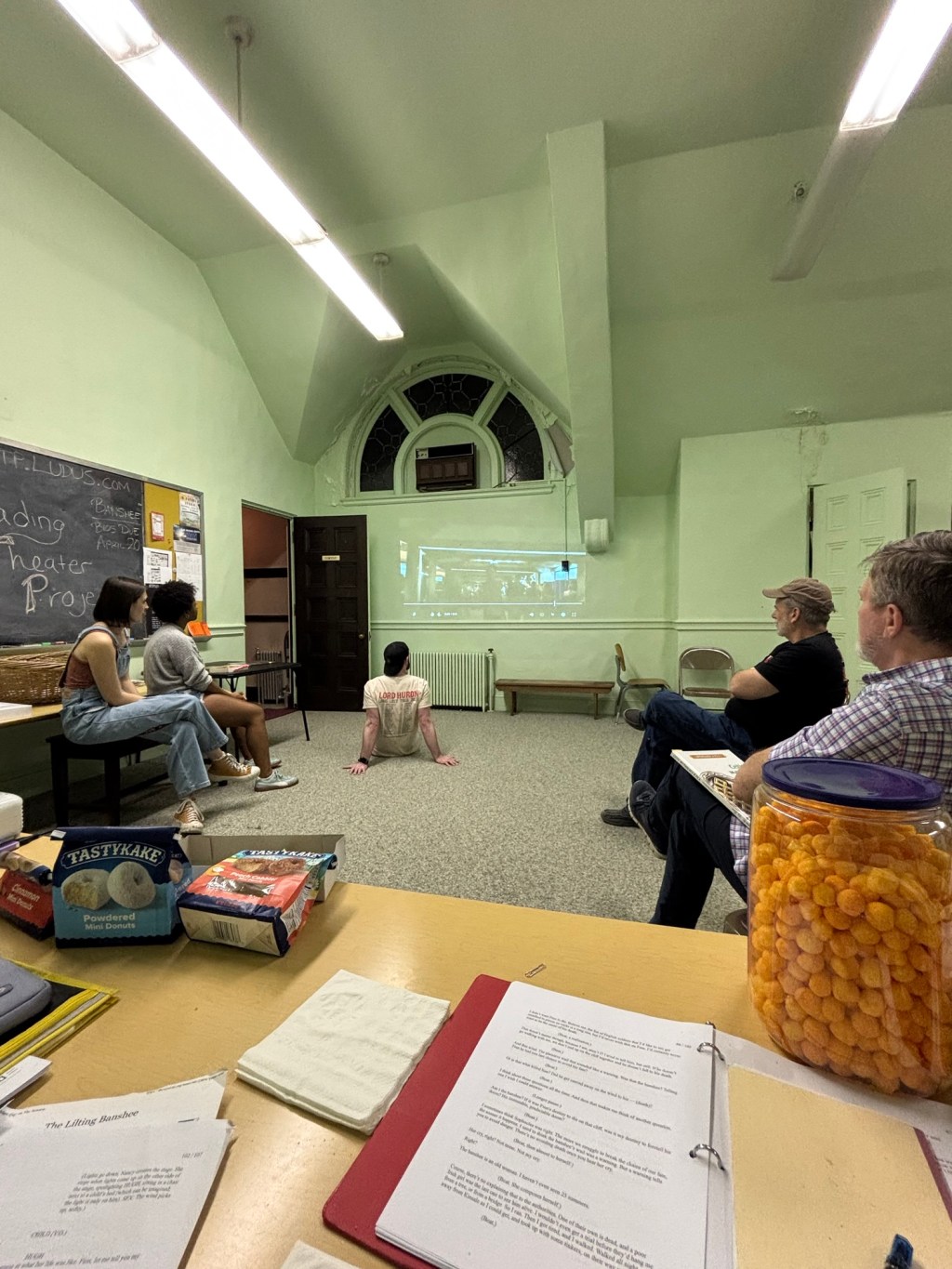
Kimberly Patterson, a friend and an amazing playwright, came to rehearsal this week to give the cast and crew a thorough history lesson.
How thorough? The first slide was titled “8,000 B.C.”
She went through the history of the island, including the Viking invasions, the invasion of the Normans and the eventual conquest by the British Empire, touching on the religious history that sparked the divide that still prevents Ireland from being a unified country today. Kimberly talked to us about the development and suppression of the Irish language, the 1798 Rebellion and its fallout and the eventual war for independence that brought (most of) Ireland its freedom.

She has provided us with loads of articles on Irish folklore, providing a glossary of terms and concepts that I mention in the script.
To an experienced performer this all may seem like run-of-the-mill dramaturgy. But to me it was a fascinating deep dive into a subject I love so much I wrote a play about it.
(More than one play, but let’s keep our eye on the ball here.)
All of the research and historical context is important to the play, even though “Banshee” is fictional. Kimberly’s dramaturgy validated (and sometimes corrected) the secondary world I created. More importantly, she gave the actors insights into the roots of their characters’ backgrounds and motivations.
No one exists in a vacuum. Not even made-up characters.
When my latest revision changed the location because of a historical error, part of me thought: No one will even notice. What are the odds that anyone who sees the show knows enough about Kinsale, Ireland, to realize that the setting is an impossibility?
Still, the change had to be made.
Even in the world of fiction, facts matter.
 Adam-Richter.com
Leave a comment