

Welcome to my little playwriting blog.
I started this because this year, in 2026, my full-length play “Banshee” will get its world premiere production thanks to the lovely folks at Reading Theater Project. This blog chronicles my journey as a playwright, watching and helping my first full-length production come to life.
“Banshee” is directed by Jody Reppert, a phenomenal director and visionary, and stage managed by Sean Sassaman, with whom I’ve worked since I started writing plays again in 2018.
I’m writing about it to document the exciting process. I’m blogging about it because I am stuck in early 2000s internet technology, and I hate doing video.
So if you want to read words about a playwright’s role in the process of bringing theater to life, you’ve come to the right place. I’ll leave comments open, and occasionally respond to the non-spammy ones.
First up: Why a banshee? I’m so glad you asked. Read on:
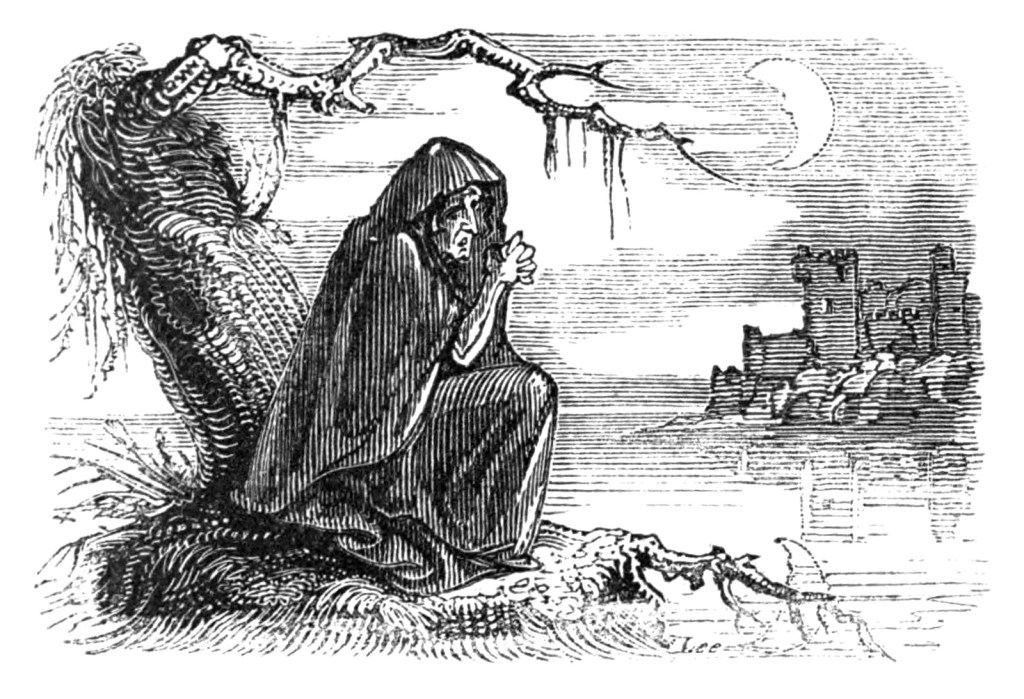
I knew little about banshees when I started writing a play about one.
The assignment was to write a play in the Japanese Noh tradition. I had less than a day to write it, so I leapt to Wikipediaand began outlining. But rather than retell a Japanese folk tale — about which I knew nothing — I decided to dive into my own cultural heritage and tell the tale of one of Ireland’s most famous mythical creatures.
Another mythical creature, the Dullahan, was already the subject of a short play of mine, so I decided to skip him this time around. Check out “Colleen’s Outer Demon” if you’re interested — or you like puppets.
All I knew at the beginning of the process was that the banshee is an old woman whose cry brings people to their death. Not until my play had been through several drafts and at least one table read did I start to learn more about the mythological creature.
One invaluable resource has been “Fairy and Folk Tales of the Irish Peasantry,” edited by William Butler Yeats. The book has three tales of banshees, each described in similar ways:
“I began to feel a could wind blowin’ through the hollow o’ me heart.”
“There was lifted up one voice of woe,
One lament of more than mortal grief …”
“The figure was now quite silent, and its garments, which had before flown loosely in the wind, were closely wrapped around it.”
Each of these descriptions — provided by the storytellers, not Yeats himself — evokes striking image of the banshee.
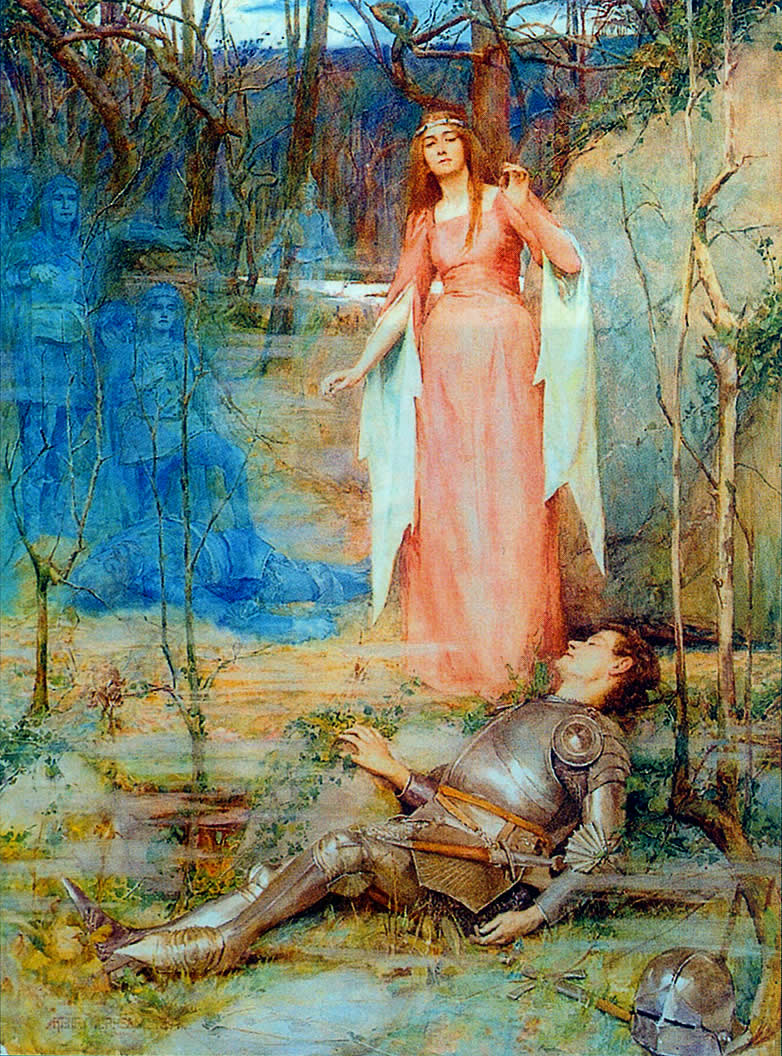
Other stories I’ve found describe her in different ways. Though she’s always a woman, sometimes she is old, sometimes young; sometimes she laughs, sometimes she cries. The tales all vary, but the main purpose is the same: When you hear the banshee’s cry, death will follow.
There are, of course, more books than Yeats’ on the subject. I recommend “The Banshee” by Elliott O’Donnell, full of tales about the woman.
One other detail struck me about the legend. D.R. McAnally Jr. describes it in his book “Irish Wonders”:
The Banshee attends only the old families, and though their descendants, through misfortune, may be brought down from high estate to the ranks of peasant-tenants, she never leaves nor forgets them till the last member has been gathered to his fathers in the churchyard.
That fact shaped later drafts of “Banshee” as I worked out who was going to die and why.
Oh, yeah: Spoiler alert: In my play called “Banshee,” about a faerie who portends death, someone dies.
Anyway, I will probably keep collecting stories about the banshee, and other Irish figures of myth, long after the lights go down on this play.
What started as a humble writing exercise has grown into a newfound obsession with Irish folklore in general, and the banshee in particular. I hope “Banshee” does her justice.
 Adam-Richter.com
Leave a comment